

Welcome aboard:
ATTENTION FUTURE PILOTS, THIS MESSAGE IS FOR YOU!
Aviation will occasionally push you to the absolute limit of your capabilities. On those high-pressure days, you must be prepared to make split-second decisions where the stakes are nothing less than life or death. It is YOUR immense personal responsibility to keep everyone on board safe.
While the exact cause of this tragic Prime Air accident is still under investigation, National Transportation Safety Board (NTSB) Chair Jennifer Homendy shared a staggering statistic: the NTSB has investigated roughly 3,000 runway excursions since 2008—an average of three every single week.
While technical malfunctions may play a role in many cases, a massive percentage of these incidents could be avoided through disciplined
Aeronautical Decision-Making (ADM).
This is precisely why stabilized approach criteria were implemented in modern civil aviation.
Rapidly changing conditions may push any flight crew into a dangerous situation during a flight, specially in descent and approach creating high workload situation:
To combat these threats, regulatory jurisdictions established strict parameters called Stabilized Approach Criteria:
Flight Path: The aircraft is on the correct lateral and vertical path, requiring only small heading and pitch adjustments.
Airspeed: Indicated airspeed is strictly within operator tolerances, typically between VREF and VREF+20 Kts.
Configuration: The aircraft is fully configured for landing with the gear down and landing flaps set.
Sink Rate: The descent rate does not exceed 1,000 feet per minute.
Power Setting: Engines are out of idle.
Checklists and Briefings: Landing checklists and briefings completed.
Add the Touchdown Zone: The landing should occur within the designated Touchdown Zone (TDZ).
(the definition of Stabilized Approach may be different depending on your jurisdictions and be more limiting for certain companies)
In this specific accident, it appears the crew missed every single stabilization "gate." Every single one of those deviations should have triggered an immediate go-around.
Maintaining these strict criteria is a pilot's fundamental duty!
While commercial manuals mandate it, private pilots should voluntarily adhere to these exact same standards.
When you are busy flying an instrument approach, specially in adverse weather, you do not have the time to second-guess or re-evaluate your situation. That is exactly why these rigid limits exist.
The moment you violate a single parameter, the decision is already made for you: GO-AROUND!
(Try again or divert, depending on the conditions.)
Making correct, high-stakes decisions in a three-dimensional environment does not come naturally to human beings. It is a disciplined skill that must be deliberately taught, deeply understood, and rigorously practiced to keep yourself and your passengers safe.
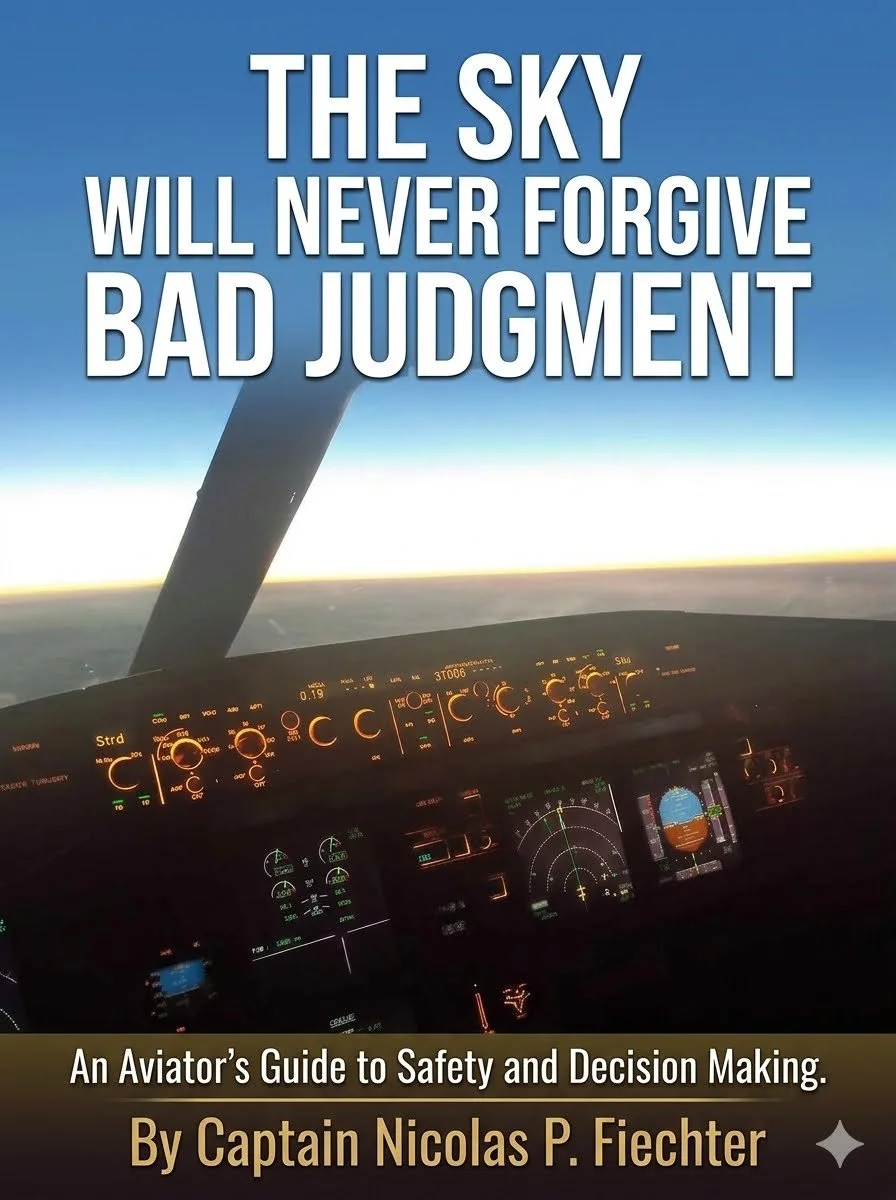
“The Sky Will Never Forgive Bad Judgment”
is the best book to improve Aeronautical Decision-Making skills and prevent critical situations as much as possible. It's available on Amazon: a.co/d/0bWMi2he continue reading below to learn more about this book.
Be safe out there and always: “Happy Landings”
Aviation Safety Consulting LLC Presentation Video
Mastering Aeronautical Decision-Making (ADM) and Flight Deck Management (FDM) is essential for maintaining safe, efficient operations when the pressure builds. These critical skills empower you to navigate complex scenarios, prioritize tasks effectively, and make sound, real-time decisions in the cockpit.
The Safety Workshop is available on request, click “Booking” on the Top…

Why Young Pilots Should Read my book: “The Sky Will Never Forgive Bad Judgment”
This concise, targeted study guide on Aeronautical Decision-Making (ADM) is essential reading for student pilots, newly certificated pilots, and low-time aviators. It delivers practical wisdom that can dramatically improve safety and confidence in the early stages of a flying career.
1. The Critical Vulnerability Window
Young pilots face the highest accident risk during the "killing zone" — typically between 50 and 350 total flight hours. This is when technical skills are still developing, but real-world judgment is often untested. The book directly addresses this dangerous phase by teaching how to make sound decisions before you need them in the air.
2. Judgment Is What Keeps You Alive
Flying an airplane is relatively easy when everything goes right. The difference between a safe return and an incident (or worse) almost always comes down to judgment, not stick-and-rudder skills. The title says it all: The sky will never forgive bad judgment. Bad decisions — continuing into deteriorating weather, pressing on with fatigue, poor risk assessment, or failing to divert — have caused countless avoidable accidents. This book equips you with systematic tools to evaluate hazards, consider alternatives, and mitigate risks in real time.
3. Practical ADM Training for Real Flights
Unlike dense FAA handbooks, this guide focuses on:
Strengthening aeronautical decision-making skills
Flight deck management under stress
Recognizing and breaking error chains
Making timely, effective choices in challenging situations
Studies and real-world data show that pilots trained in ADM reduce errors significantly — sometimes by up to 50% — because they learn to think proactively rather than reactively.
4. Written Specifically for New Pilots
The author created this resource with young and newly licensed pilots in mind. It bridges the gap between flight training and real-world flying, where instructors aren't sitting beside you and decisions must be made quickly. It's short enough to read cover-to-cover but packed with actionable insights you can apply immediately.
5. Builds Long-Term Professional Habits
Reading this book early helps instill a safety-first mindset that lasts throughout your career — whether you fly for fun, become a flight instructor, or pursue airline or corporate flying. Good judgment compounds over time and becomes your most valuable asset as a pilot.
Bottom line: Technical proficiency gets you off the ground. Superior judgment keeps you alive and brings you home safely. For young pilots building their experience, The Sky Will Never Forgive Bad Judgment is one of the highest-ROI investments you can make in your flying education. A few hours with this book could prevent a lifetime of regret.
Fly smart, stay humble, and never forget — the sky is unforgiving. Read it, internalize it, and make better decisions every time you fly. Safe skies!

A skilled captain proactively ensures safe flight operations with swift, informed decisions. Their ability to anticipate challenges, manage risks, and lead the crew effectively is critical to aviation success.
In the Pilot Safety Workshop, you will learn how to:
- Improve aeronautical decision-making skills
- Manage flights efficiently
- Handle difficult situations effectively
- Respond to emergencies
- Make quick, effective decisions
- Recognize and manage fatigue